Fiction and Non-Fiction
There is more than one way to paint the page with the genius that lies in wait inside your head. So, what should you be practicing?
The rich literary tradition in human history has led to the creation of many types of writing. There are a lot of genres that get into the nitty gritty of writing and its specific purpose in science, academia, ect. However, the gems I’ll be talking about are the most commonly called upon by popular demand, and the styles that offer the best value to the average reader and writer. I want to focus on the genres accessible to the beginner to help them discover their literary talents: fiction and non-fiction.
Everyone knows about fiction and non-fiction, If you were to separate all writing into only two categories, these would be the big two. One is the accounting of real life by the author, and the other is the invention of a fictional life from the imagination of the author. Both are equally prominent genres in the literary world.
Fiction
This is what I think most people imagine when they think of the word writing. The telling of a grand tale, gravitating towards being larger than life. This is probably because of our early childhoods, filled with bedtime stories and fairy tales that feed our all-consuming imaginations
Fiction is fueled by these imaginations and can be an extremely powerful form of storytelling, as history has shown. The individual’s creative fire is strong, and derives it’s power from reflections of real life and often real struggles. It is also mixed with fantasy, and it has fewer boundaries to you plotting your story.
Related: 12 Novels considered the “Greatest Book Ever Written”

Photo by Dids on Pexels.com 
photo by Vinu00edcius Vieira
A fiction story could be about a young heroin who helped save the American revolution, just as easily as it could be about a cartoon pig that learns how to be the best family man he can be. This makes use of the full mental sandbox without many parameters.
The Parameter in fiction that you ARE bound by is structure. Since what you are writing isn’t true, you must design a plot that maximizes a hold on the interest of the reader. A formula must be followed so that you end up with a fun to read piece of work.
Structure of fiction
There are certain ingredients to include in your fiction story, which has historically been the ideal way to allow the reader to indulge in the story. As readers we are all used to these “narrative arcs” even if we don’t realize it. The basic components are:
Exposition: You introduce the world your story takes place in, including characters, setting.
Inciting Incident: The problem shows itself, and we find out our main conflict in the story.
Rising Action: Things start happening. We see the main character working to solve the conflict, with events getting more complicated and intense.
Climax: The tension is at its MAXIMUM. Something has to give, and the protagonist is at the highest point of conflict.
Falling Action: Things settle down after the climax. We get the satisfaction of some answered questions and a sense of how life is after the climax.
Resolution: The conflict is resolved, we see the full outcome whether the protagonist achieved their goal or not, and the story is finished.
Fiction is for you if
- You have a clear and active Imagination
- Your favorite books and movies are epic tales or Sci-Fi
- Stories and fan-fiction are on auto-play in your mind already as a habit
A great way to play around with fiction is to use some writing prompts and spark your creativity.
Non-Fiction
This is for the reader and writer who take pleasure in the real account of life. There are many ways you can write about true life. You can report it like its news, or history unraveling in the written word.
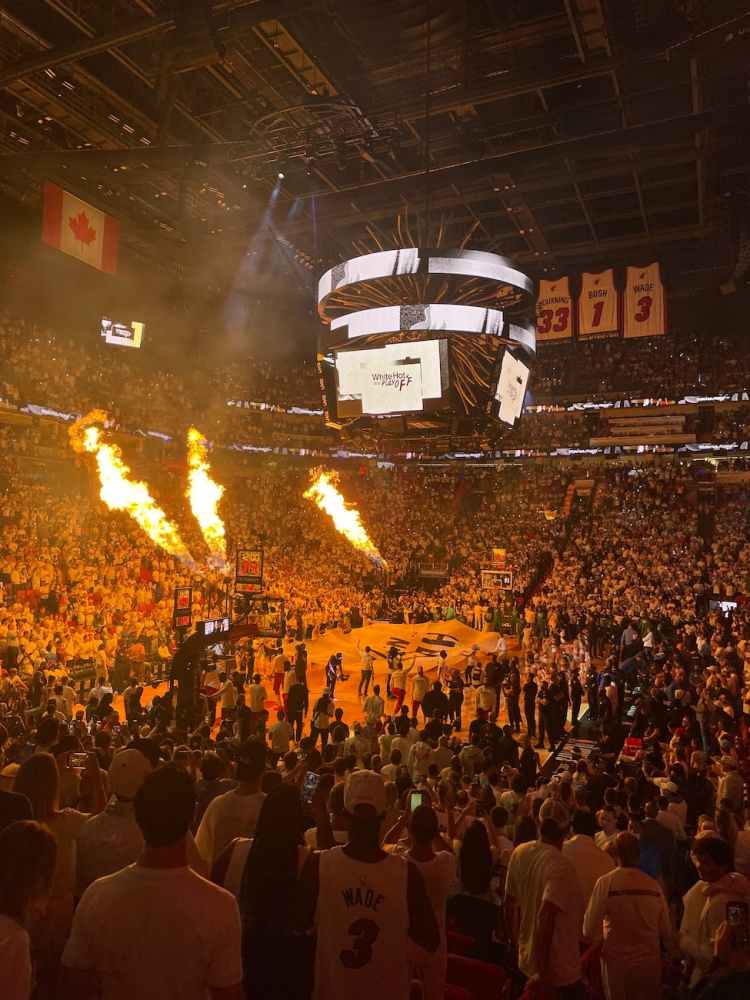
Photo by Allen Boguslavsky on Pexels.com 
Non Fiction has the intangible quality of being attached to the unified consciousness of the world. Its the same hard-to-describe feeling of excitement that makes it fun to watch events and sports LIVE, like a live awards show, or a good UFC PPV, because everyone else is watching it at the same time. With Non-fiction its not that it is the same time watched, but the same realness which makes it attractive as the common ground of reality.
You could also write an article that may change someone’s life. You can teach someone how to advance their career, start a blog or instal a solar panel.
Structures of Non-fiction
Chronological order: This type of writing shows you the order in which things happened. This is how history books are presented as well as writing that explores the progression of specific events or ideas. It helps us understand the concepts of things that existed, and then were built on over time.
Cause and Effect: This type of writing illustrates how one thing is connected to another. You can start with the cause and describe in detail how it led to the effect. You can also start at the effect and work backwards. This is great for educating people on forward-thinking and potential outcomes.
Descriptive: Descriptive writing does a deep dive on the characteristics of something, whether it be a place, a historical event, or a new social media platform. All of the details of the thing are described and examples are used. This is commonly used in science, but also in fiction.
Problem and solution: This kind of non-fiction is about exploring a problem. The issue is identified so that solutions can be focused on. At least one solution is discussed as an answer to the problem. This is prevalent in formal as well as casual opinion writing.
Compare and Contrast: Compare and contrast challenges the reader to look at two things at the same time. In this process we look at all of the things that are the same, as well as those that are different. This is used in things like tech products, historical empires, and pretty much anything else.
Non-Fiction is your style if
- You love observing the crazy events of real life, and forming your opinion on it
- You love reality TV and movies based on a true story
- You are apt at observing the many layers and depth of life’s events
- You love to share information, whether to help people get information or to build their skills
Non-fiction is a fun genre to write and is worth upping your game in.
Creative non-fiction

This style puts the fun in non-fiction. Your poetry skills get tuned up when you approach non-fiction from a creative standpoint, even though you’re not writing poetry.
Your job is to focus on a place, a person, an object, or an experience. The point is to provide a vivid and artistic picture of the plots unfolding in the real world. Details are everything in creative non-fiction, and most of the time it is written from the first person, but it doesn’t have to be.
Your first work of creative non-fiction can be when you stole your mom’s car to go joyriding when you were 12, or, about a native-american artifact you found buried in the mountains. Your descriptive skills should show your reader a unique point of view about the thing you’re writing about. There should be emotion attached to make the story felt.
Try creative non-fiction if you:
- Have a poetic way of looking at the world
- You appreciate history and the origins of things
- You have an eye for noticing the environment around you
Of all of the different kinds of writing to be aware of FICTION and NON-FICTION are the main two, with an honorable mention for CREATIVE NON-FICTION. See which one resonates more with you innately by brainstorming and figuring out which way your mind leans. Fiery conflict, truth-seeking or beauty-illustrating, find the ones that bring out your talent.
So which genre will you try first? or if you’re a veteran writer, which one is your best weapon already? Leave a comment and share your style with us.
Also…
Do these writing prompts to try out these styles
FICTION: Write a quick story starting with a character waking up in their car.
NON-FICTION: Write a review of your meal at the last place you dined out at.
CREATIVE NON-FICTION: Write about the last time you took a road trip that was at least two hours long. Was it a good experience or not?
 Mind of Liberty